Outdoor Lighting Design in Dallas–Fort Worth & Waco

Your Home Was Designed to Be Seen After Dark

Exceptional outdoor lighting begins long before the first fixture is installed. It begins with understanding your property—its architecture, mature trees, gardens, pathways, outdoor living spaces, and the way you experience it after sunset.

Lumos Outdoor Lighting provides custom outdoor lighting design in Waco, Dallas–Fort Worth, and surrounding areas, creating thoughtfully composed lighting systems for homes and properties that deserve more than simply being made brighter.

Our designer-led approach considers what should be illuminated, what should remain subtle, where the eye should naturally travel, and how individual areas of the property should relate to one another after dark.

The result is not a collection of lights. It is a nighttime composition designed specifically for your home.
What Makes a Great Outdoor Lighting Design?

Professional outdoor lighting is not about illuminating everything.

In fact, some of the most beautiful lighting designs depend just as much on darkness as they do on light.

A thoughtful design creates depth, contrast, hierarchy, and atmosphere. Certain architectural details become focal points. Mature trees gain dimension. Pathways feel naturally defined. Outdoor living spaces become warmer and more inviting.

And the fixtures themselves largely disappear into the landscape.

At Lumos, we design around principles such as:

  • Visual hierarchy and focal points
  • Appropriate fixture placement
  • Beam angle and spread
  • Brightness and intensity
  • Color temperature
  • Glare control
  • Shadows and contrast
  • Architecture and landscape relationships
  • Long-distance sightlines
  • Fixture concealment
  • Movement through the property
  • The intended atmosphere of each space

Every decision contributes to the way the entire property feels after sunset.

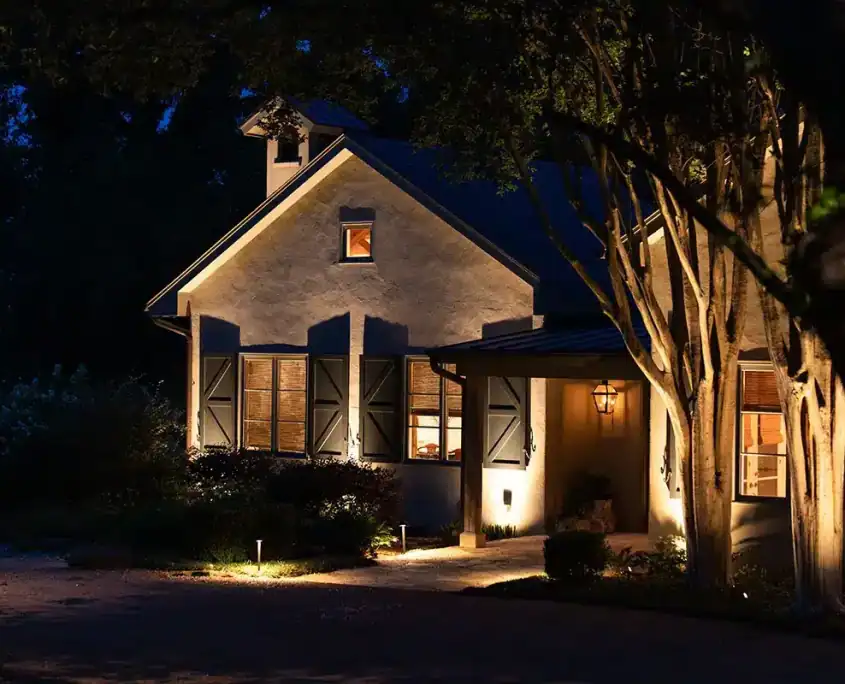
Nighttime exterior of a stucco house with warm interior lights, closed shutters, a lit porch lantern, glowing pathway lights and nearby trees.
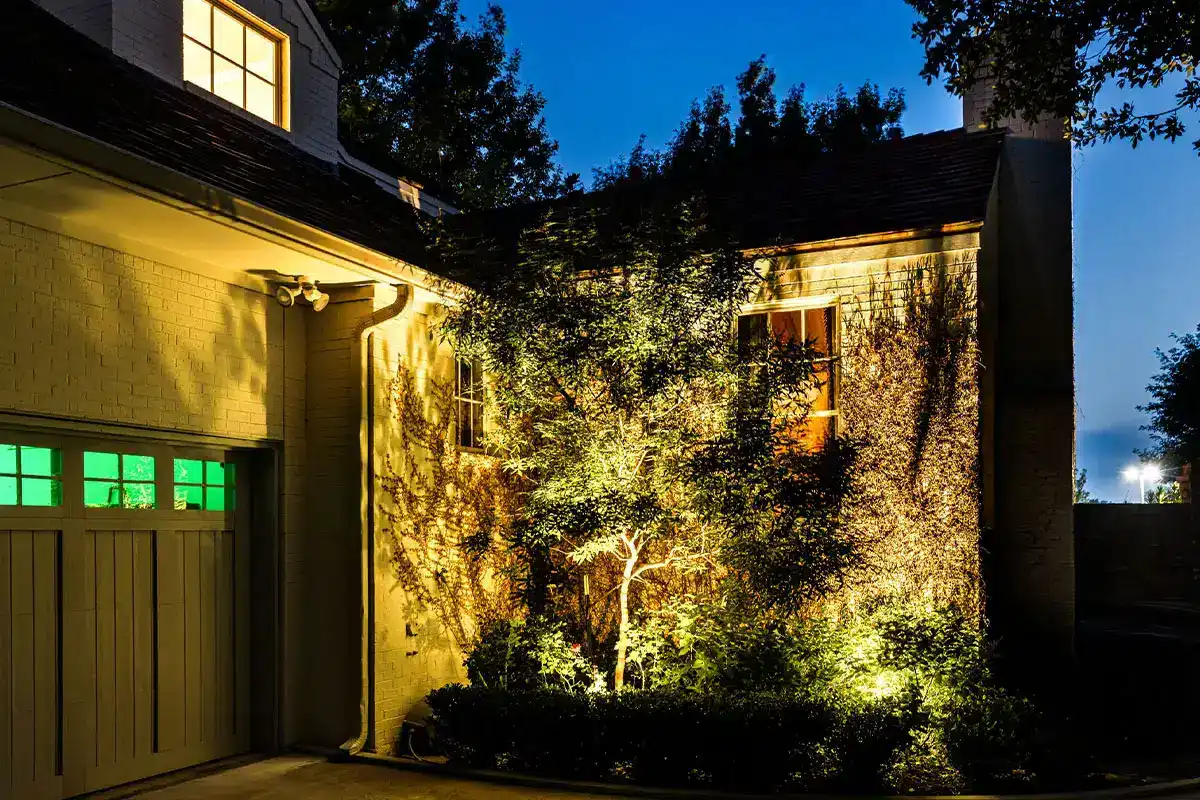
Night view of a house exterior with a lit tree and shrubs casting shadows on a brick wall, illuminated windows and garage door with green panes.

Outdoor Lighting Designed Around Your Architecture

Your home already has a visual language. Rooflines, columns, masonry, stonework, entryways, windows, textures, and architectural details all contribute to its character during the day.

At night, those features can disappear without thoughtful illumination. Architectural lighting can selectively reveal those details while adding depth and dimension to the facade.

Depending on the property, we may use:

  • Architectural Uplighting

    Light placed from below can emphasize columns, architectural projections, stonework, brick, and vertical elements.

  • Facade Washing

    Wider, softer illumination can reveal larger sections of a home’s exterior while maintaining an even and refined appearance.

  • Grazing

    Positioning light close to textured surfaces can emphasize stone, brick, masonry, or other architectural materials through light and shadow.

  • Integrated & Concealed Lighting

    Where appropriate, fixtures can be recessed or carefully concealed so the source of the light becomes secondary to the effect it creates.

The goal is not to illuminate every architectural feature.
It is to identify the ones that define the home and allow them to become part of the nighttime composition.

Landscape Lighting That Reveals the Property After Dark

Trees and landscaping often provide some of the greatest opportunities for outdoor lighting design.

A mature oak can become a dramatic nighttime focal point. Layered plantings can add depth around the home. Garden beds can frame architectural features, while distant trees can visually extend the property beyond the immediate residence.

Our landscape lighting designs may incorporate techniques such as:

  • Uplighting

    Strategically positioned fixtures illuminate trees and landscape features from below, emphasizing trunks, branching structure, foliage, and scale.

  • Downlighting & Moonlighting

    Fixtures positioned above the landscape can create soft, natural illumination reminiscent of moonlight filtering through trees.

  • Silhouetting

    Lighting a surface behind a distinctive plant or object allows its shape to appear as a dramatic silhouette.

  • Shadowing

    Careful fixture positioning can project the shape of a tree or plant onto an architectural surface, adding movement and visual interest.

  • Layered Lighting

    Combining foreground, middle-ground, and distant illumination creates a sense of depth rather than allowing the landscape to disappear beyond the first row of fixtures.

  • Cross Lighting

    Cross lighting uses light from multiple angles to add depth and dimension to trees, sculptures, and landscape features. It works especially well for mature trees and focal points viewed from more than one direction.

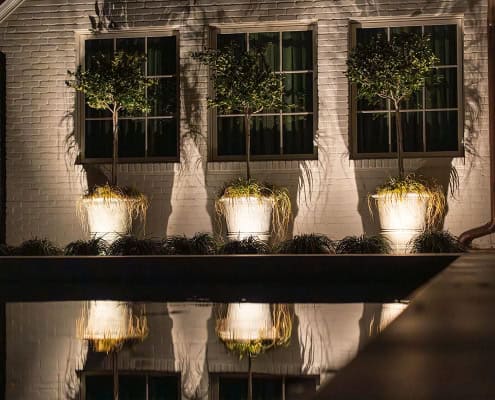
Exterior of Clover Ridge home at night. Three potted topiary trees are illuminated against a white brick wall, reflected in a pool. Modern and elegant outdoor design.

Hidden Source. Beautiful Effect.

One of the marks of a refined outdoor lighting system is that you notice the property before you notice the fixtures.

Whenever practical, we work to conceal or visually minimize the light source.

Fixtures may be tucked into planting beds, recessed into appropriate surfaces, positioned within trees, or carefully located outside primary sightlines.

Glare shields, precise optics, thoughtful aiming, and appropriate fixture selection can further control where the light travels.

The objective is simple:

Reveal the subject, not the source.

When the design is successful, the lighting feels like a natural part of the property rather than equipment added to it.

Outdoor Living Spaces Designed for the Way You Live

Outdoor lighting is not only something you view from the street.

It changes how you experience the property from within it.

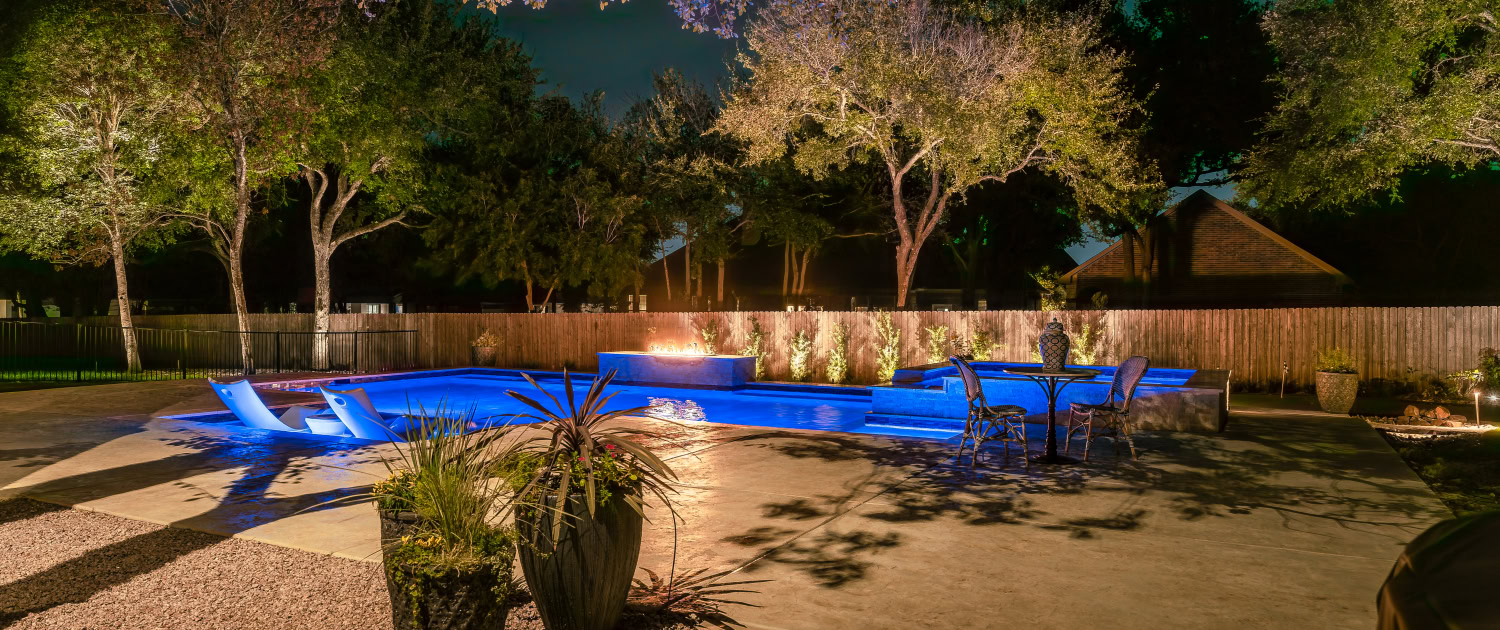
Patios, pools, outdoor kitchens, fire pits, courtyards, porches, and gathering spaces all require a different approach from front-yard architectural lighting.

These spaces should feel comfortable enough for conversation and entertaining without being flooded with harsh light.

We consider:

  • Where people sit and gather
  • How guests move between spaces
  • Views from inside the home
  • Reflections from water and glass
  • Steps and elevation changes
  • Adjacent landscaping
  • Architectural features
  • Areas where glare could become distracting
  • The atmosphere you want to create

The result can transform an outdoor area from something you occasionally use into a true extension of the home after sunset.

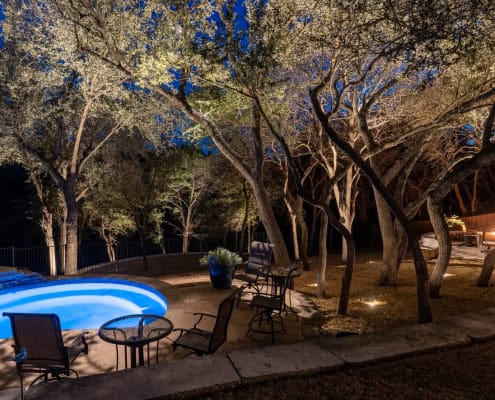
Outdoor lighting softly illuminating trees around a patio with a fire pit on the right side and an illuminated pool with patio chairs surrounding it on the left.